

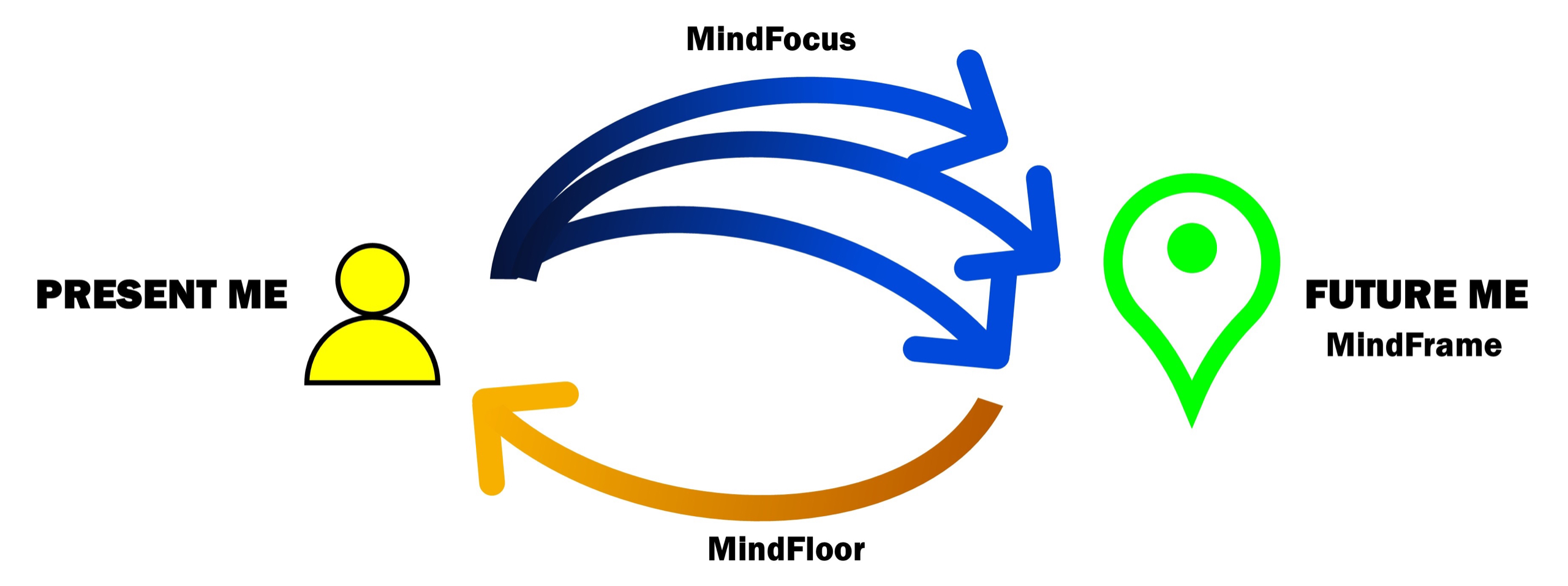
Hopeful Curiosity
You Have Our Permission To Think Like A Kid Again!
Your brain has 86 billion neurons. An advanced AI has over a trillionparameters. Both learn the same way: prediction, feedback, and reward. The difference is you can control your brain's “learning rate” and that dial is called curiosity. Science shows it triggers the same dopamine reward circuitry used by AI reinforcement learning. Lose it, and your neural network stops updating. Here's how to crank it back up.
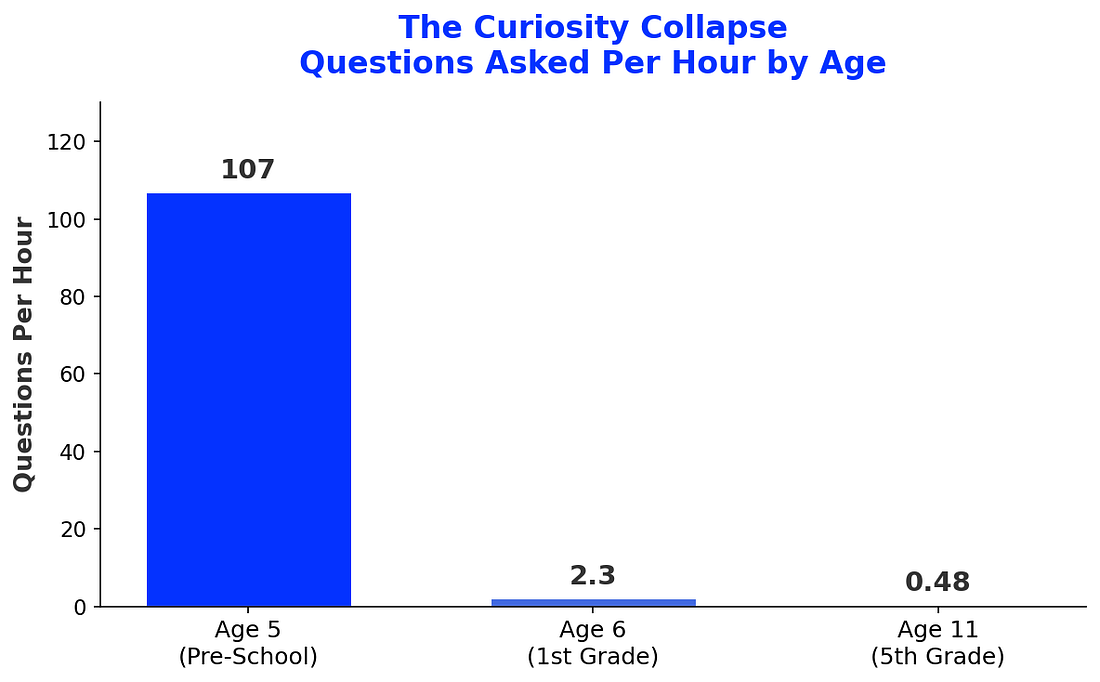
Source: Susan Engel, Williams College, ‘Children’s Need to Know: Curiosity in Schools’ (Harvard Educational Review, 2011)
The Number That Should Concern Every Parent and CEO
I was watching a conversation between David Brooks and the Yale Jackson School of Global Affairs recently, and one data point stopped me cold.
Developmental psychologist Susan Engel at Williams College tracked how many questions children ask per hour. At age five, the average kid asks 107 questions per hour. They’re relentless. They want to know why the sky is blue, why dogs have tails, why grandma’s hair is white. Their brains are running at full throttle, pulling in data from every direction.
Then school starts.
By first grade, the entire class asks 2.3 questions per hour combined. By fifth grade? 0.48 questions per hour. Less than one question every two hours from a room full of eleven-year-olds.
Engel sat in the back of a science classroom watching kids discover an old-fashioned balance scale. They were experimenting with it, testing weights, genuinely doing science. The teacher shut it down: “Enough of that. I’ll give you time to experiment at recess. There’s no time for experiments now. We’re doing science.”
Read that again. No time for experiments... during science class.
Engel’s conclusion is brutal: if you lose your curiosity by age 11, you probably don’t get it back.
I disagree with Engel on one thing. I think you CAN get it back. But you have to understand what curiosity actually is, neurologically. And that’s where it gets interesting.
Your Brain is a Large Language Model (LLM)
If you spend a lot of time with AI companies, you've watched frontier models go from party tricks to systems that can reason, code, and hold complex conversations. And the more we learn about how LLMs work, the more we realize: your brain is running the same algorithm.
Consider the parallels.
Your brain has roughly 86 billion neurons connected by an estimated 100 trillion synapses. GPT-4 has approximately 1.8 trillion parameters across its mixture-of-experts architecture. Both are massive pattern-recognition networks. Both learn by prediction.
Here’s how an LLM trains: it reads a sentence, predicts the next word, checks whether it was right, and adjusts its internal weights. Right answer? Strengthen that pathway. Wrong answer? Weaken it and try again. Billions of repetitions, trillions of adjustments.
Your brain does the same thing. Every experience is a prediction. You reach for a coffee cup and predict its weight. You start a sentence and predict how the other person will react. When reality matches your prediction, your synapses strengthen. When it doesn’t, your brain recalibrates. Neuroscientists call this predictive coding, and a 2024 study in Nature Machine Intelligence by Gavin Mischler and colleagues at Columbia University found that as LLMs become more advanced, their internal representations actually become more similar to human brain activity during speech processing.
“Your brain is the original foundation model, pre-trained by evolution, fine-tuned by experience.”
But here’s the critical difference. An LLM’s learning rate is set by engineers. They decide how aggressively the model updates its weights in response to new data. Too high and it’s unstable. Too low and it stops learning.
In your brain, that learning rate has a name. It’s called curiosity. And unlike an LLM, you can adjust it yourself.
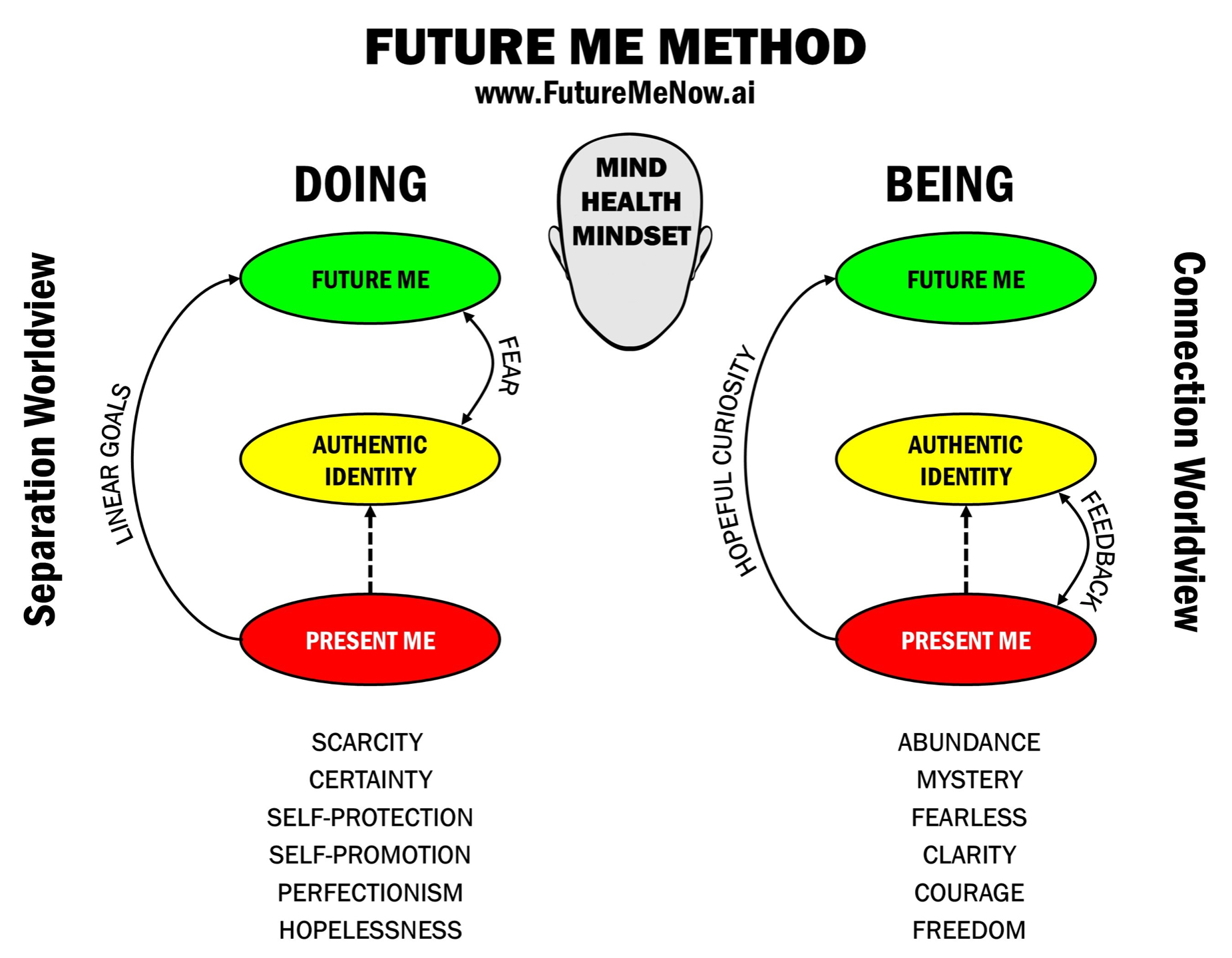
The Dopamine Connection: Curiosity as a Reward Signal
In 2014, neuroscientist Matthias Gruber and his team at UC Davis put people in an fMRI scanner and asked them trivia questions. Some questions triggered intense curiosity (“How many miles of blood vessels are in the human body?”). Others didn’t (“What is the state bird of Delaware?”).
What they found, which is published in the journal Neuron, changed our understanding of how curiosity works.
When participants were highly curious, their ventral tegmental area (VTA) and nucleus accumbens lit up. These are the same brain regions activated by food, sex, and addictive drugs. Curiosity hijacks your reward circuitry. It is not a nice-to-have personality trait. It’s a neurochemical event.
But that wasn’t even the most interesting finding. During the curiosity state, participants were shown random faces, completely unrelated to the trivia. Later, they remembered those faces significantly better than faces shown during low-curiosity moments. Curiosity didn’t just help them learn the answer they wanted. It supercharged their memory for everything happening at that moment.
This is exactly how reinforcement learning works in AI. When an LLM gets a reward signal through RLHF (Reinforcement Learning from Human Feedback), it does more than strengthen the specific output. It also adjusts the surrounding weights. The reward ripples through the network.
“Curiosity is your brain’s RLHF. It’s the reward signal that tells 86 billion neurons: pay attention, something important is happening, encode everything.”
Without that signal, your brain does what an untrained model does: it defaults to cached responses. You stop updating. You become, in AI terms, a frozen model.
Curiosity Literally Keeps You Alive
And this is about much more than learning faster.
In 1996, researchers Gary Swan and Dorit Carmelli at SRI International followed 1,118 older men over five years as part of the Western Collaborative Group Study. They measured curiosity at baseline and then tracked who survived. The result: highly curious people had significantly higher survival rates, even after controlling for age, smoking, cardiovascular disease, and other risk factors. They replicated the finding in 1,035 older women.
A 2025 study published in Nature Scientific Reports confirmed the mechanism: higher trait curiosity was directly associated with greater cognitive reserve, the brain’s buffer against age-related decline. Curious brains keep building new connections. Incurious ones atrophy.
Today, with A.I. we are starting to focus on early detection through full-body MRI, AI-powered diagnostics, and advanced blood work. But the data keeps pointing to something we can’t put in a scanner: mindset is a biological variable.
Curious people don’t merely think differently. Their brains physically maintain themselves better.
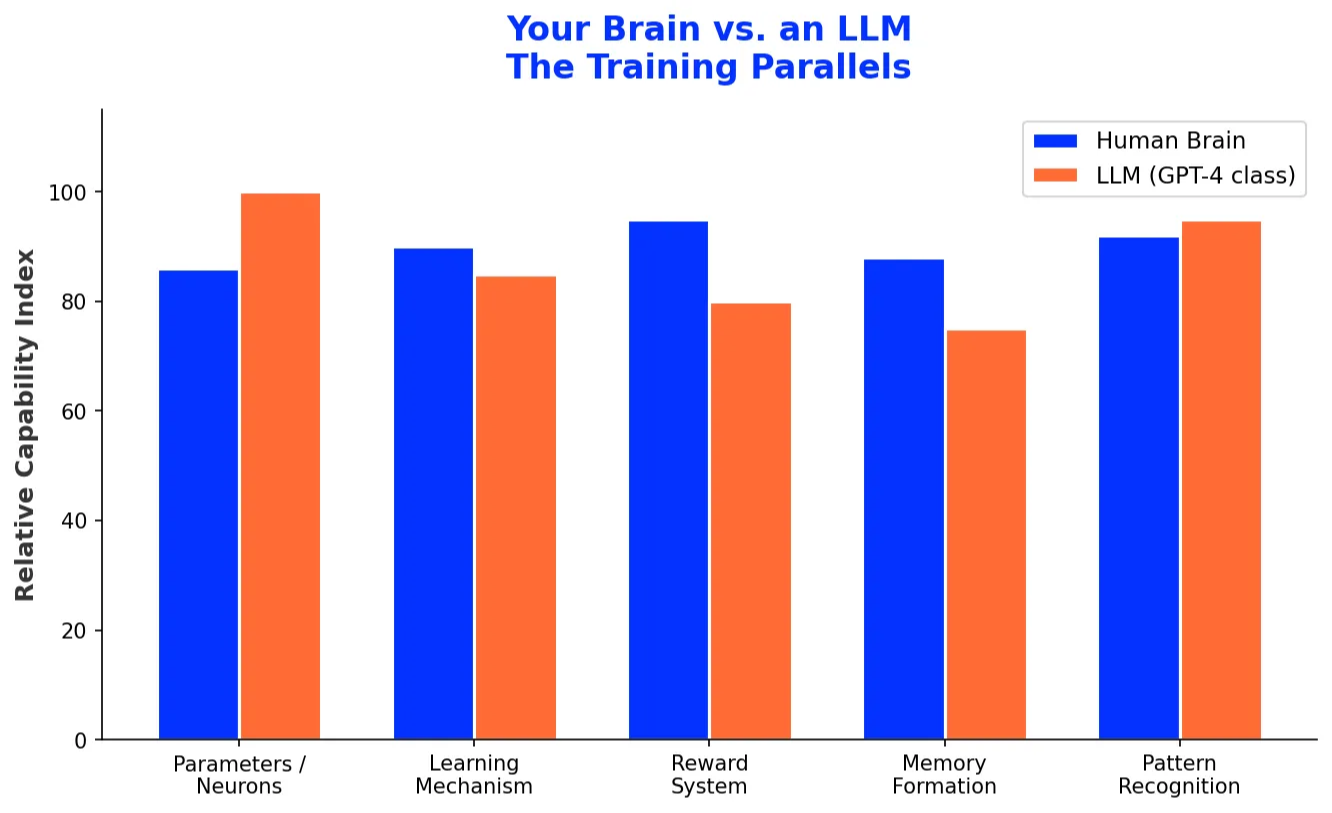
Source: Comparative analysis based on Mischler et al., Nature Machine Intelligence (2024); Gruber et al., Neuron (2014)
Five Ways to Crank Up Your Learning Rate
A 2025 study from UC Santa Barbara, led by Madeleine Gross and Jonathan Schooler and published in the journal Mindfulness, proved that curiosity is trainable. They built a smartphone app that gave participants daily “curiosity challenges”: listen to a podcast instead of your usual playlist, ask a friend what they learned this week, try a new recipe.
After just three weeks, users showed significant increases in trait-level curiosity across three dimensions: epistemic curiosity (desire to learn), perceptual curiosity (interest in new sensory experiences), and mindful curiosity (deeper awareness of the world). Curiosity wasn’t fixed. It was a muscle they hadn’t been using.
Based on the research, here are five concrete strategies:
1. Create information gaps on purpose. Carnegie Mellon psychologist George Loewenstein identified this mechanism in 1994: curiosity fires when you know enough to realize what you DON’T know, but not enough to close the gap. Before any meeting, read one article about the topic and stop halfway. Walk in with questions, not answers.
2. Schedule “explore time” like you schedule workouts. I block 30 minutes every morning to read about a field I know relatively little about. This month it’s quantum error correction. The point isn’t to become an expert. It’s keeping the VTA firing.
3. Ask dumb questions in rooms full of smart people. In events around the world, I watch billionaire CEOs pretend they understand everything. The ones who actually learn are the ones who raise their hand and say, “Wait, explain that again.” I’ve been doing this for decades. It’s a superpower.
4. Change your physical inputs. The UCSB study referenced above found that perceptual curiosity increased alongside intellectual curiosity. Take a different route to work. Eat at a restaurant where you can’t read the menu. Travel somewhere that confuses you. Novelty primes the dopamine system.
5. Teach what you learn within 24 hours. When I learn something that blows my mind, I look for a way to turn it into an opportunity to teach it to others. Teaching forces your brain to organize and consolidate. In LLM terms, it’s like running an additional fine-tuning pass on new data.
The Frozen Model Problem
Most adults over 40 are running on cached responses. Same opinions they formed at 30. Same mental models. Same reactions to new information. In AI terms, they’re a frozen model: no longer training, just running inference on outdated weights.
I see this in boardrooms constantly. A CEO who built a successful company in 2010 is still making decisions based on 2010 assumptions about technology, talent, and markets. Their neural network stopped updating fifteen years ago. They don’t realize it because the people around them stopped challenging them.
Ray Kurzweil, who just turned 78, is the opposite. In every conversation that Ray has, he’s consumed some new paper or dataset that’s shifted his thinking. He doesn’t protect old ideas. He’s perpetually re-training. I think that’s a bigger factor in his cognitive sharpness than any supplement he takes.
“The most dangerous thing that can happen to your brain is to stop being surprised.”
So, What Does This Mean for You?
If you’re an entrepreneur: Your competitive advantage isn’t your product. It’s your rate of learning. Build a company culture that rewards questions over answers. Hire curious people over credentialed people.
If you’re an executive: Schedule one hour per week to explore a field completely outside your industry. The CEOs who survive disruption are the ones whose mental models are still updating.
If you’re an investor: Bet on founders who are visibly curious, the ones who ask you questions during the pitch, not just the ones with polished decks. Curiosity predicts adaptability, and adaptability predicts survival.
If you’re a student: Protect your curiosity like your life depends on it. The data says it literally does. Don’t let a system that rewards grades over questions turn you into a frozen model before you’re 25.
If you’re a parent: Count your kid’s questions. If the number is dropping, the problem isn’t your kid. It’s their environment. Find teachers who tolerate chaos. Real learning is messy.