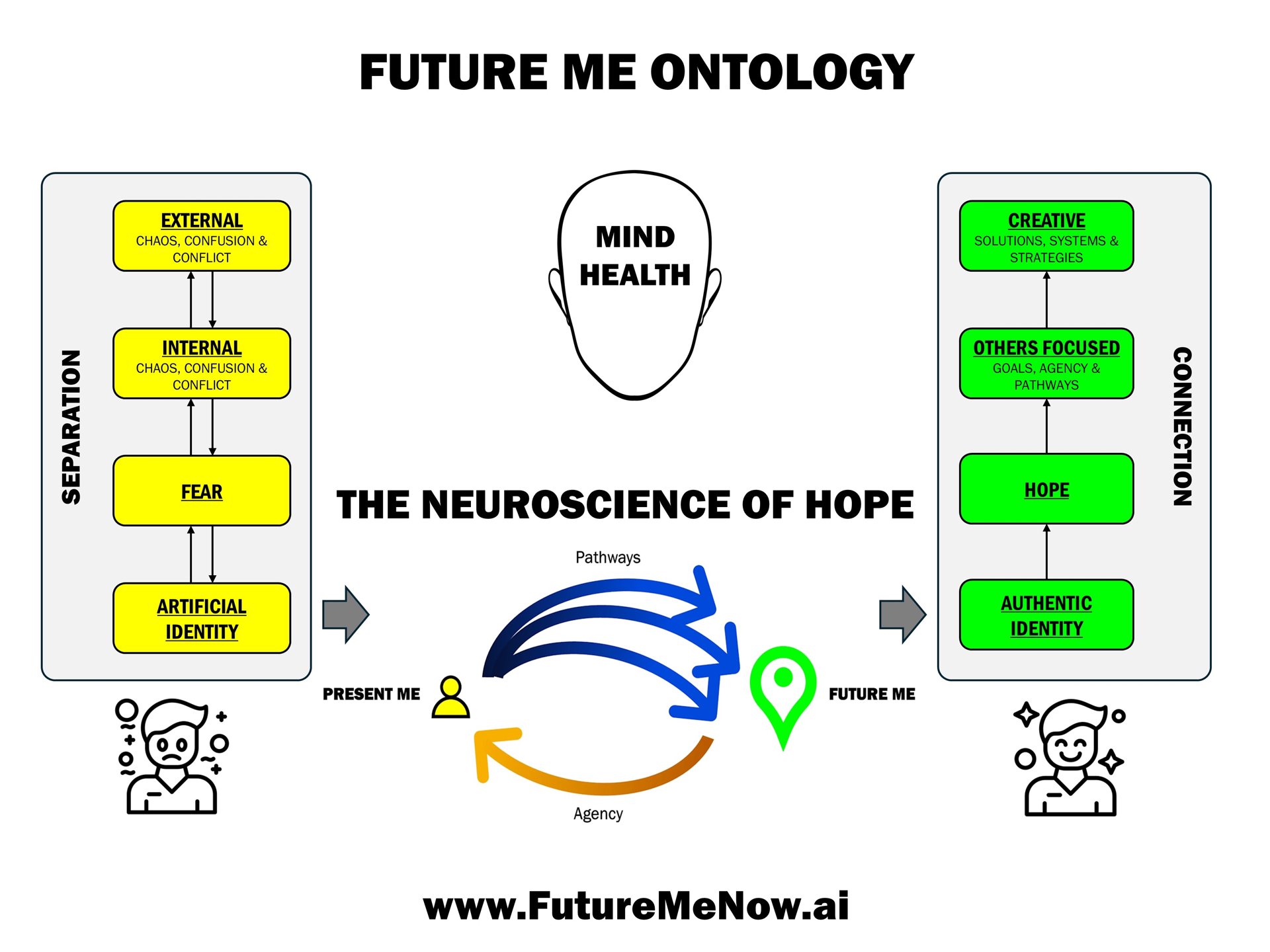
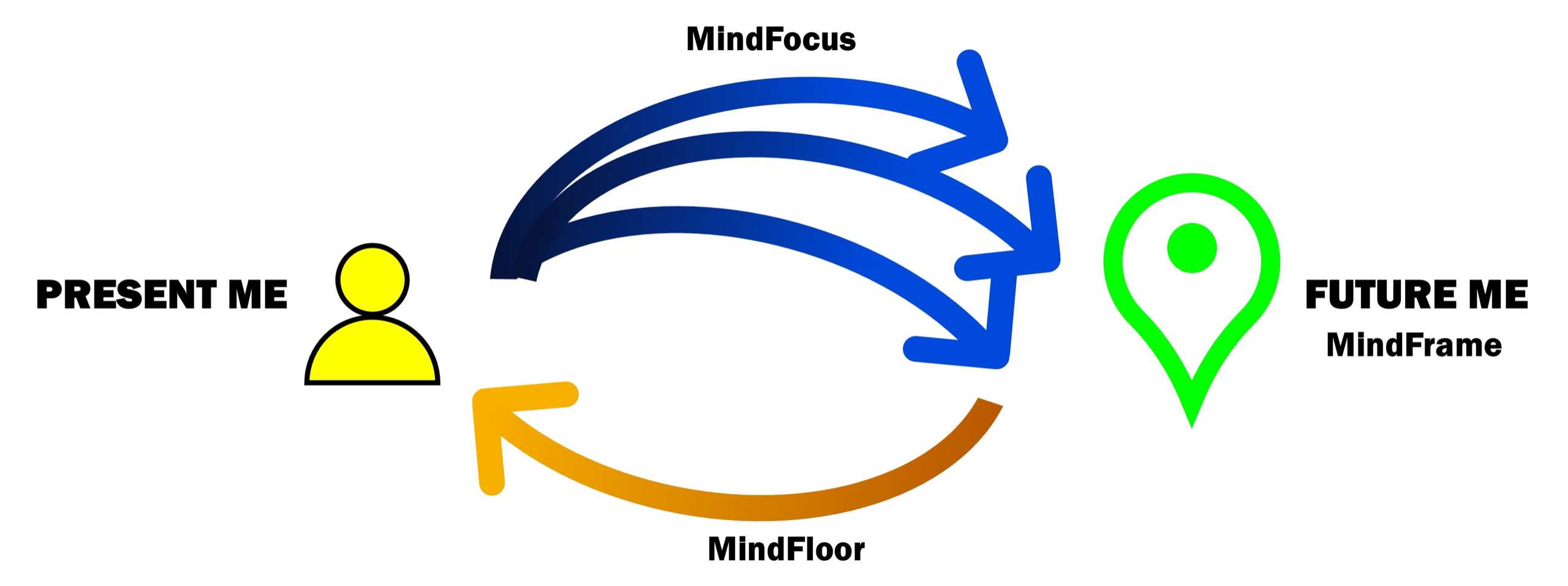
Ontology is the study of being. When we talk about human ontology, what does it mean to be a human being? What are the parts that make us up? Not head, shoulder, knees and toes parts, but do we have a mind? Do we have a soul? Do we have a spirit? Do we have bodies? Are we bodies? All those questions, or it's variations of the same question is, what kind of being are we? Are we rational? Are we volitional? Do we have freedom? All those concepts are captured in human ontology.
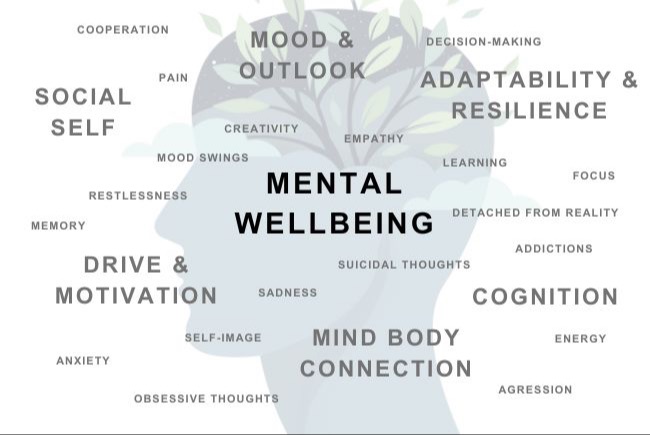
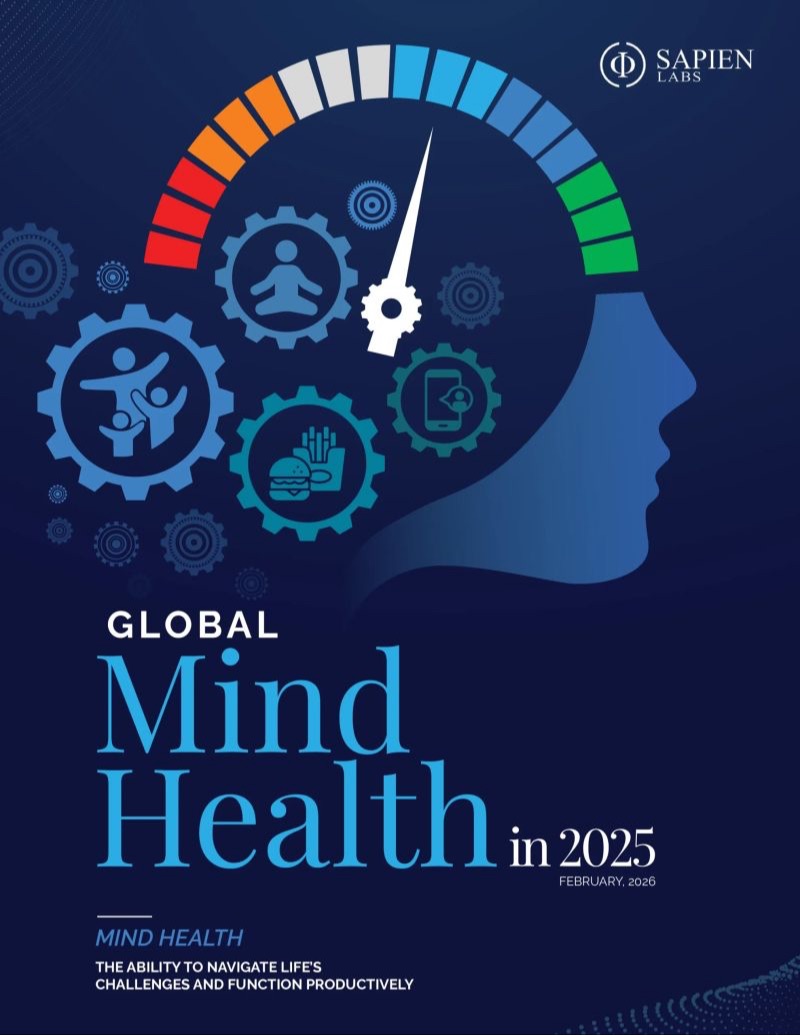
Future Me Ontology is a solution to the Mind Health crisis in our world today. Mind health is declining with each younger generation across the modern Internet-enabled world. Mind health refers to the full complement of emotional, social, cognitive and physical capacities required to navigate life’s challenges and function productively. This decline means more than a growing mental health burden. It means a potential decline in our capacity to function as a society.
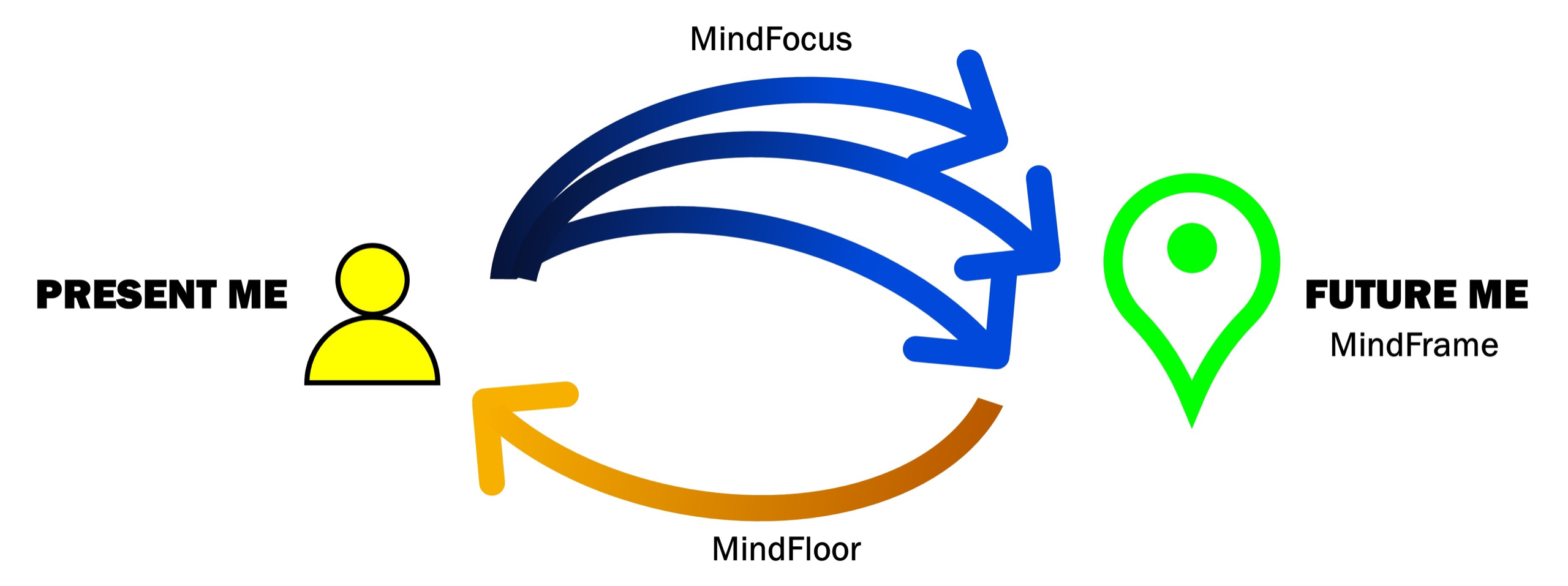
The Neuroscience of Hope
(Click Image For More Information)
It begs the question — Who am I?
If I am not my ‘insert title here’ then who am I?
A title does not make up your identity, it adds a layer to it. A relationship does not define you, it complements you — it draws out the best in you.
If the relationship ends, it does not mean a part of you is lost. The relationship revealed aspects of your identity by adding a piece to the puzzle.
The perceived self is a façade owing to your past conditioning.
Reflect on that for a moment.
Who are you if not for the sum of your past? I.e. family, schooling, friends and life experiences.
Who is the person you call “I” after all?