Future Me Curiosity
Your brain has 86 billion neurons. An advanced AI has over a trillionparameters. Both learn the same way: prediction, feedback, and reward. The difference is you can control your brain's “learning rate,” and that dial is called curiosity. Science shows it triggers the same dopamine reward circuitry used by AI reinforcement learning. Lose it, and your neural network stops updating. Here's how to crank it back up.
The Number That Should Terrify Every Parent and CEO
I was watching a conversation between David Brooks and the Yale Jackson School of Global Affairs recently, and one data point stopped me cold.
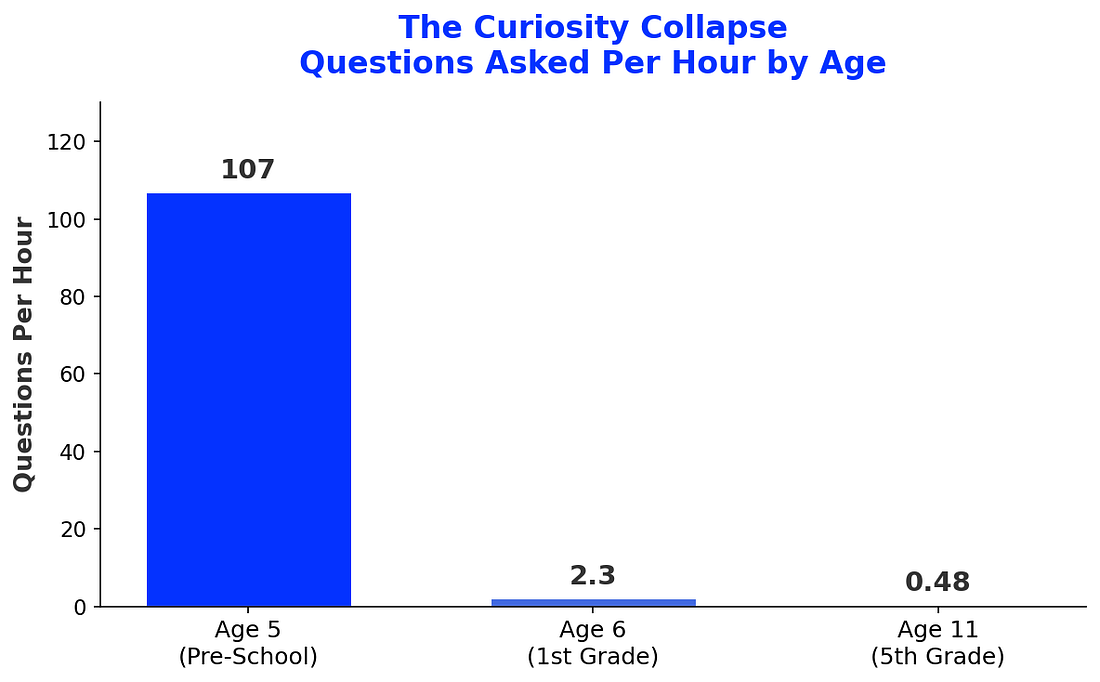
Developmental psychologist Susan Engel at Williams College tracked how many questions children ask per hour. At age five, the average kid asks 107 questions per hour. They’re relentless. They want to know why the sky is blue, why dogs have tails, why grandma’s hair is white. Their brains are running at full throttle, pulling in data from every direction.
Then school starts.
By first grade, the entire class asks 2.3 questions per hour combined. By fifth grade? 0.48 questions per hour. Less than one question every two hours from a room full of eleven-year-olds.
Engel sat in the back of a science classroom watching kids discover an old-fashioned balance scale. They were experimenting with it, testing weights, genuinely doing science. The teacher shut it down: “Enough of that. I’ll give you time to experiment at recess. There’s no time for experiments now. We’re doing science.”
Read that again. No time for experiments... during science class.
Engel’s conclusion is brutal: if you lose your curiosity by age 11, you probably don’t get it back.
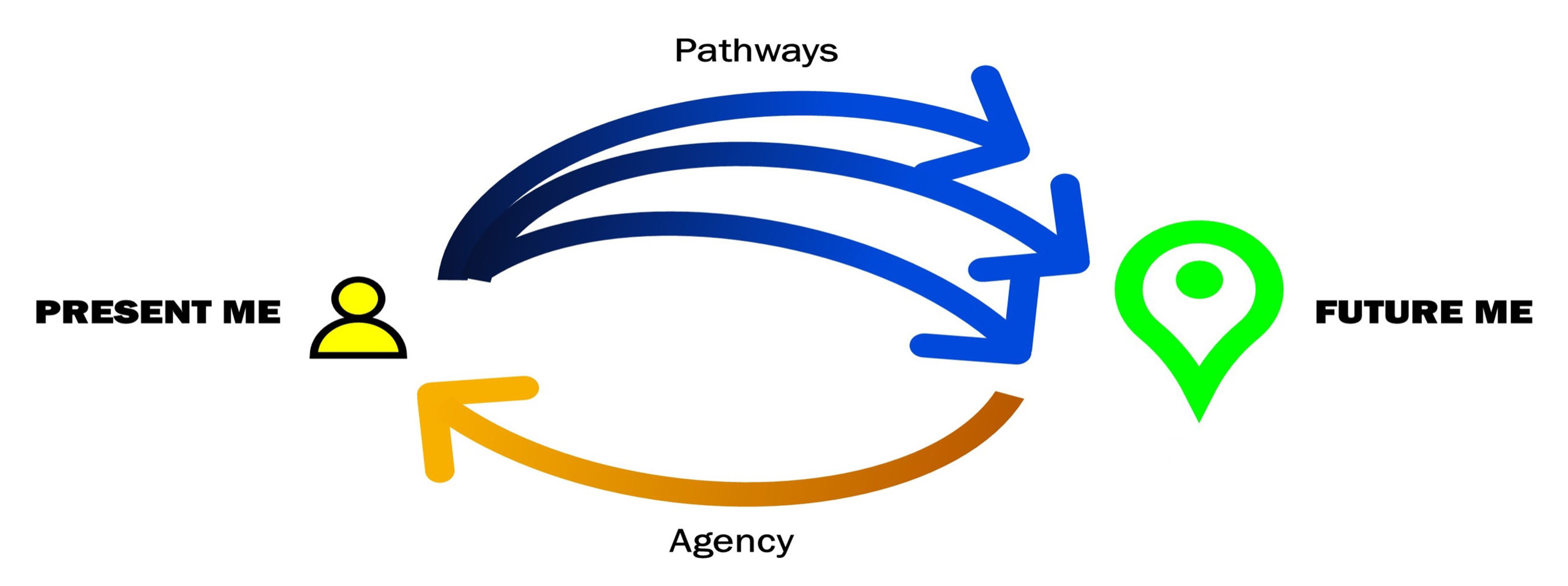
Pathway thinking is all about optionality, knowing that there are many different routes we can take to reach our future. When it feels like there’s only one path we can take to see hope happen, it feels like we’re walking a tightrope. One wrong move and we’re toast. But when we know there are countless paths we can take to reach our destination, it’s easy as a Sunday drive. Doesn’t matter if there’s some road construction along the way, because there are plenty of other streets we can take to get there.
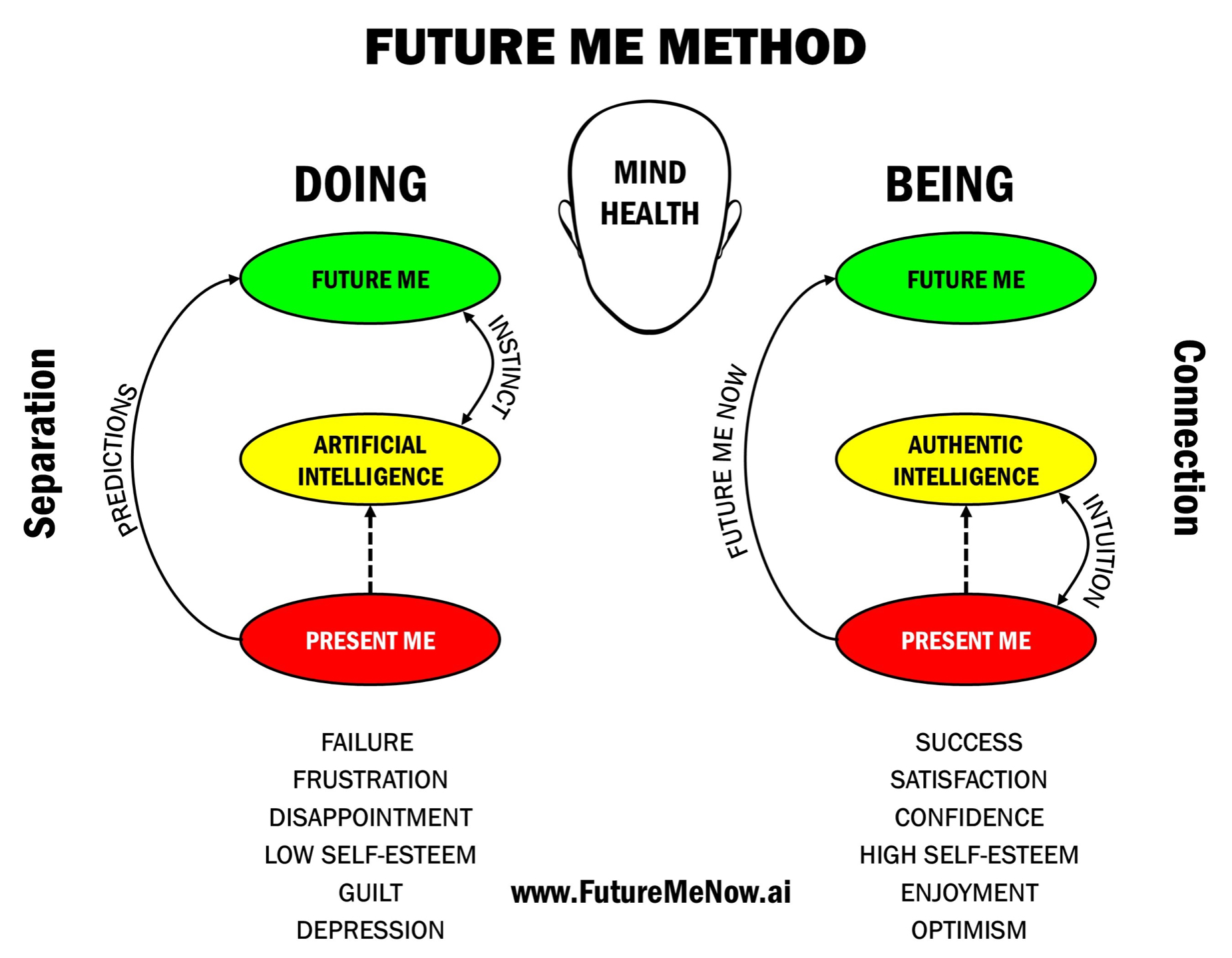
Pathways thinking is a way of seeing your life and the world as a collection of unfolding stories. Each choice you make, from the coffee you buy to the way you commute, is a pen stroke in a larger narrative. These small actions create personal and collective routes that lead toward different futures.
The Future Me Method is a mind health process that helps you recognize your own agency, the power you hold to shape the direction of your life. It connects your daily routines to grander outcomes, showing you how the fabric of tomorrow is woven into the threads of today. This is what it means to develop Authentic Intelligence.
Be Your Future Me Now
( click image below )