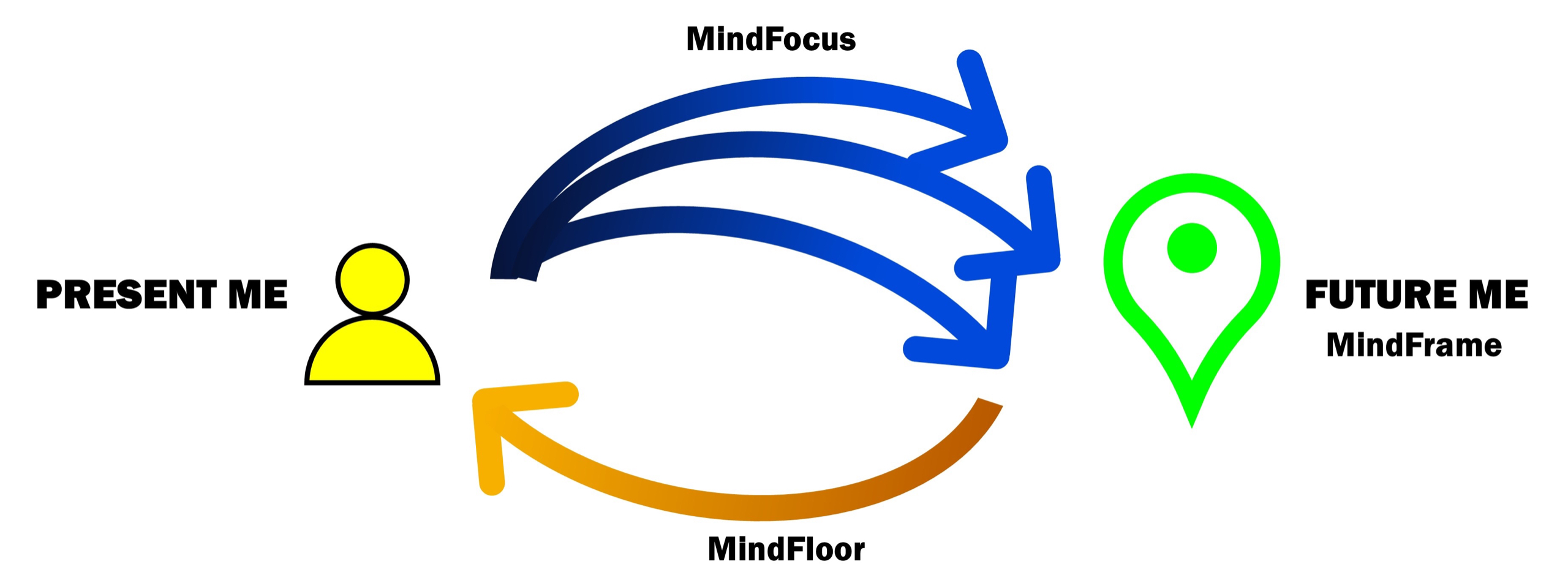

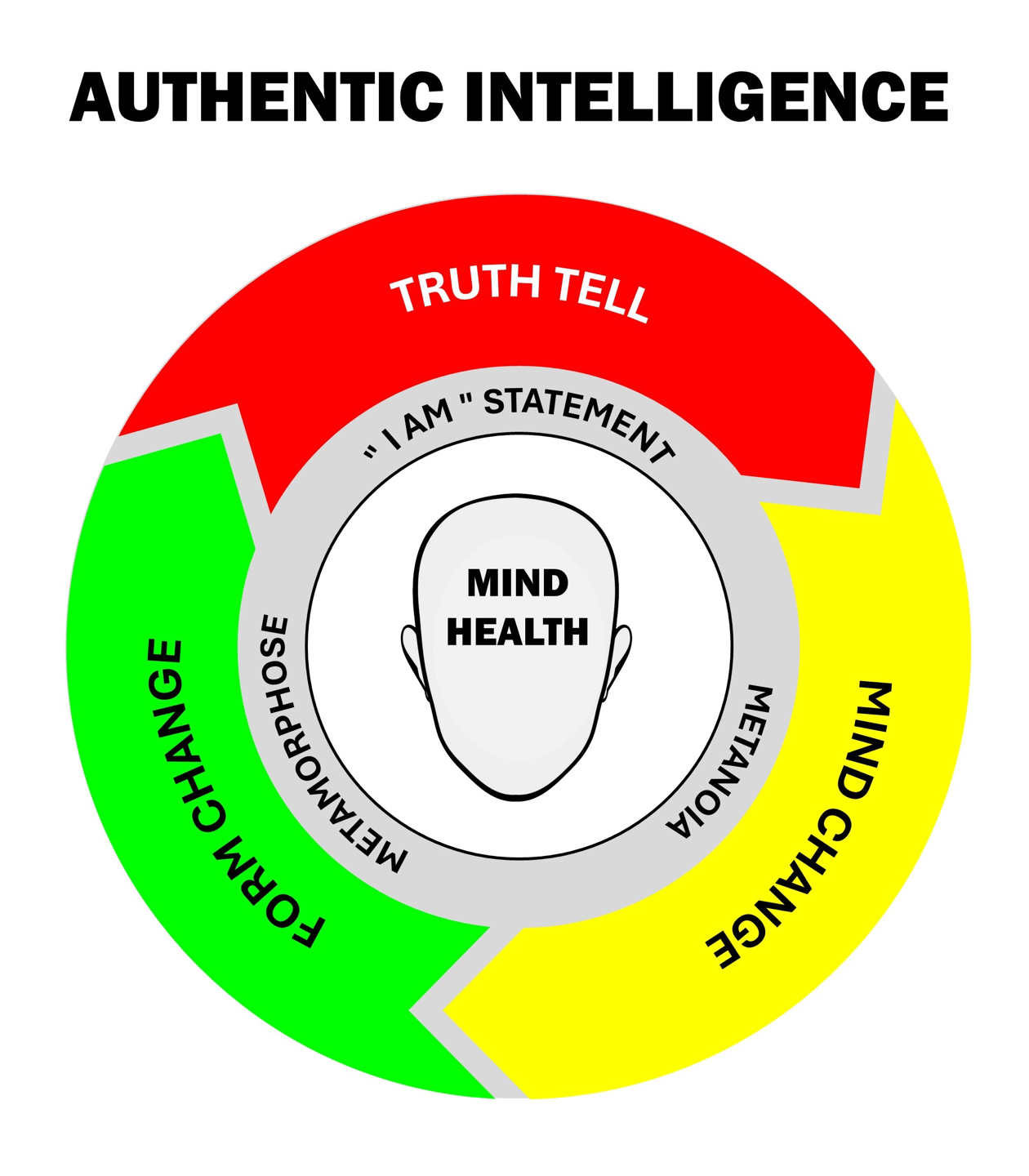
Authentic Intelligence
Your ability to think about your thinking
The highest form of intelligence, according to some researchers, isn't logic, speed or memory.
It's metacognition, the ability to think about your own thinking.
Metacognition is the brain watching itself. When you " notice yourself thinking," the spotlight turns inward. You stop being inside the thought. You start examining it.
Neuroscientist have found that during this kind of self-observation, the region in the anterior prefrontal cortex becomes more active.
In plain terms: you have a neural system specifically designed for self-observation. Your brain can study it's own code in real time.
A practical example: simple emotion labeling. Saying " I am anxious " or " I am angry " changes what the brain is doing. Not metaphorically. Literally.
My theory is that it’s all about having the right or the wrong mind frame—sometimes called “mindframe” in one word or “frame of mind”—for the task. You can have the best tools and strategies, but if you don’t have the right mind frame, things are not going to work.
According to the Merriam-Webster dictionary, a mind frame is a mental attitude or outlook. It’s more than just a mood, it encompasses the particular way someone thinks or feels about something, and deeply influences one’s behaviour.
What I find interesting is that mind frames are always presented as states in which the individual is bound to be. A mind frame seems to be a passive state.
It influences how the individual thinks and acts, but we rarely discuss how the individual can influence their mind frames.
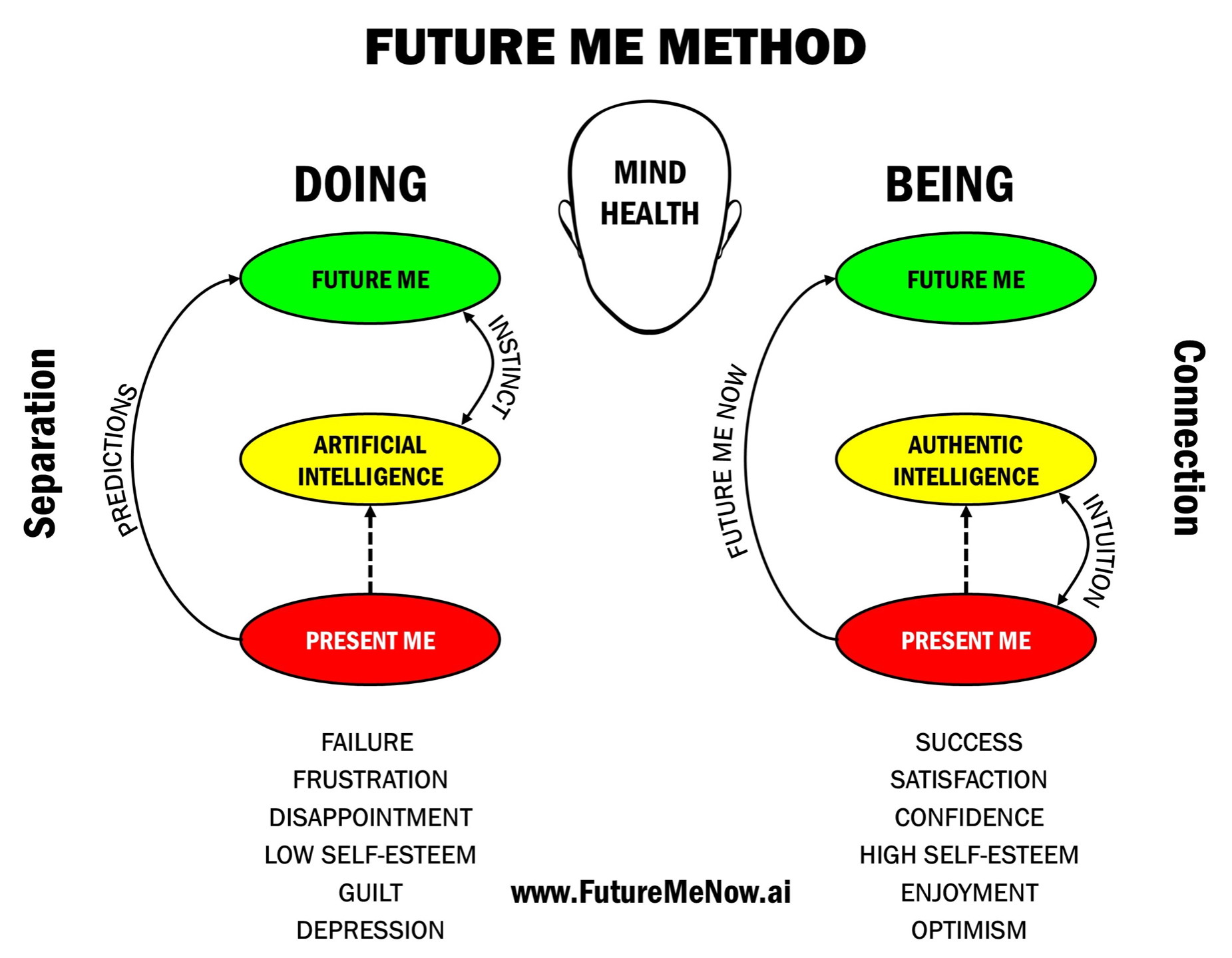
And this may be what is wrong with our approach in setting, managing, and achieving our goals. Instead of shaping our mind frames in a way that plays in our favour and makes it easy for us to progress and feel fulfilled, we see positive mind frames as lucky aids, and negative mind frames as inevitable obstacles.
What you will like about the future me method compared to other learning frameworks you have tried is that it really encourages you to create—to test, to learn, and in short apply what you learn as soon as possible to solidify an idea. It’s more of a creation framework.
Create Your Own Future Flywheel
(click on the image below)